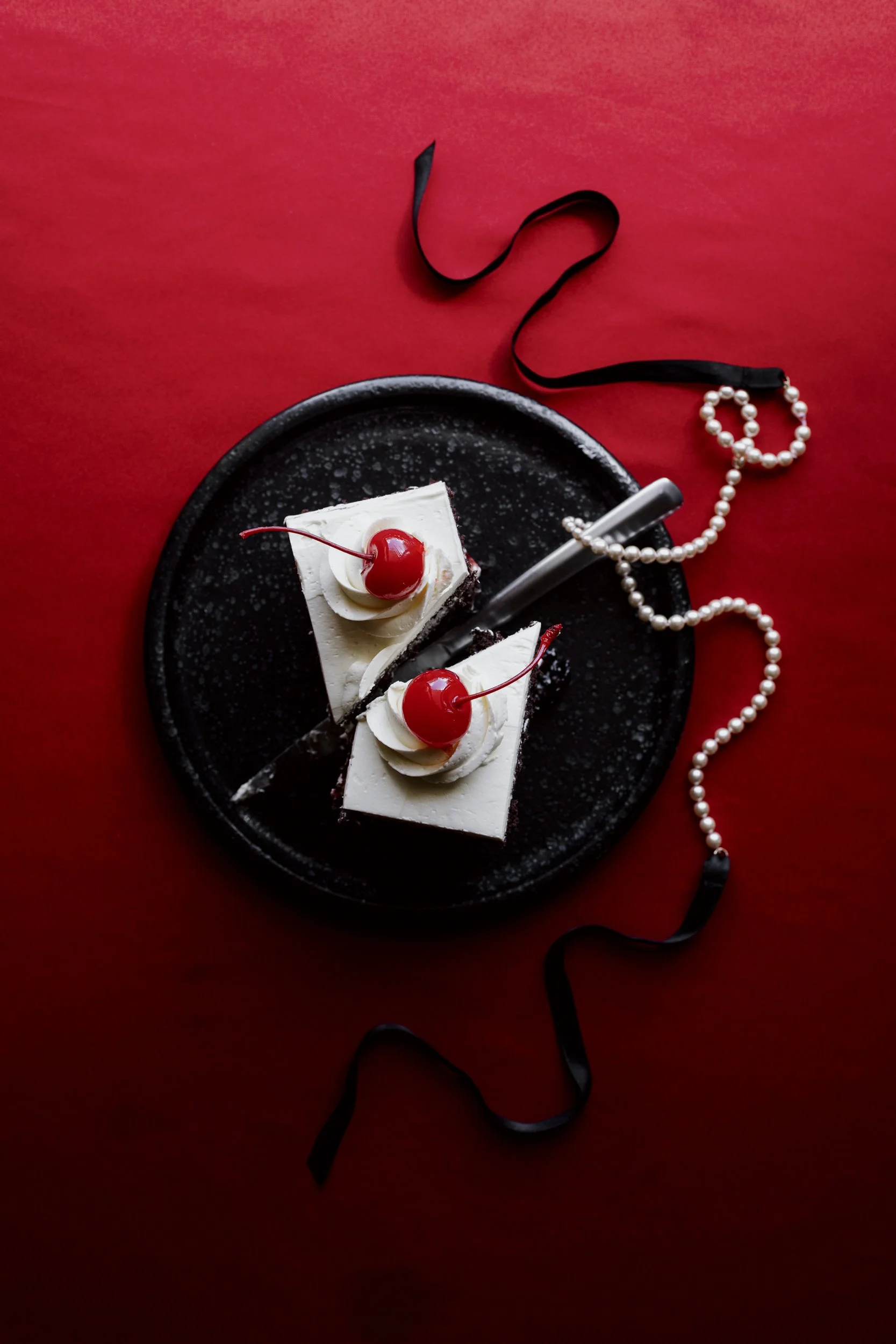
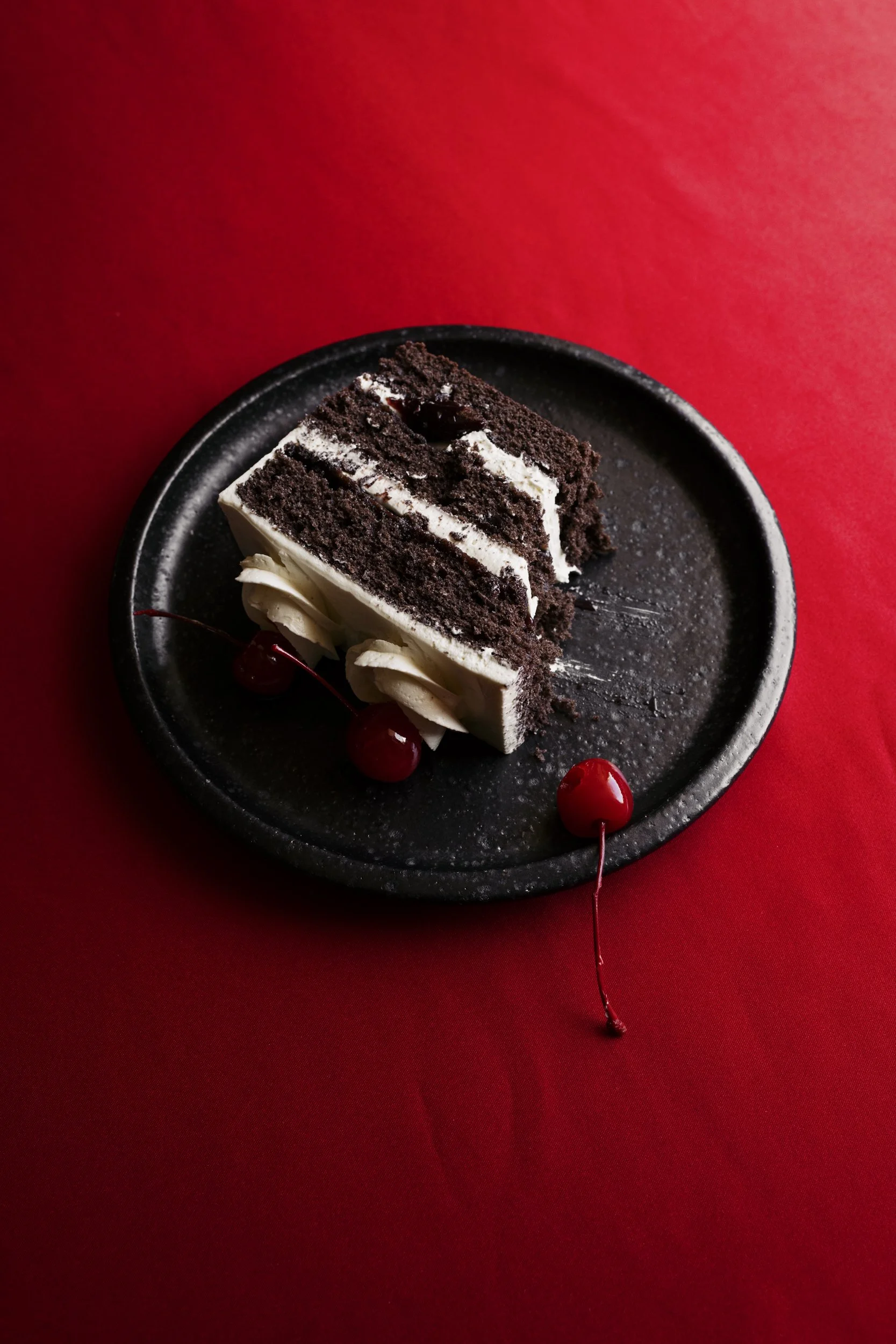
You will give substance and it will be repaid by absence.
—Hélène Cixous, from Angst
The hotel room is a tranquillised state of grace. It is an art, I have in fact, perfected. Hired time moves differently; slowly, then very fast, all at once. I grow up, then old, fall in love, it doesn’t stay. Win some but lose more, and learn the never-ending lessons. Life moves at an alarming pace, somewhere between the first kiss and the last, and the pile of dirty towels that accumulate in the sink. Ten minutes ago, he said, “You’ll see.” I heard my heartbeat reverberate in the springs of the mattress and remain there unanswered. His was the kind of hunger that writers who search for gold, only hope for; an appetite strengthened by hollowness, a desire born of irritation and muck. I let it in so as to become me, and when I left, walked out with the pearl.

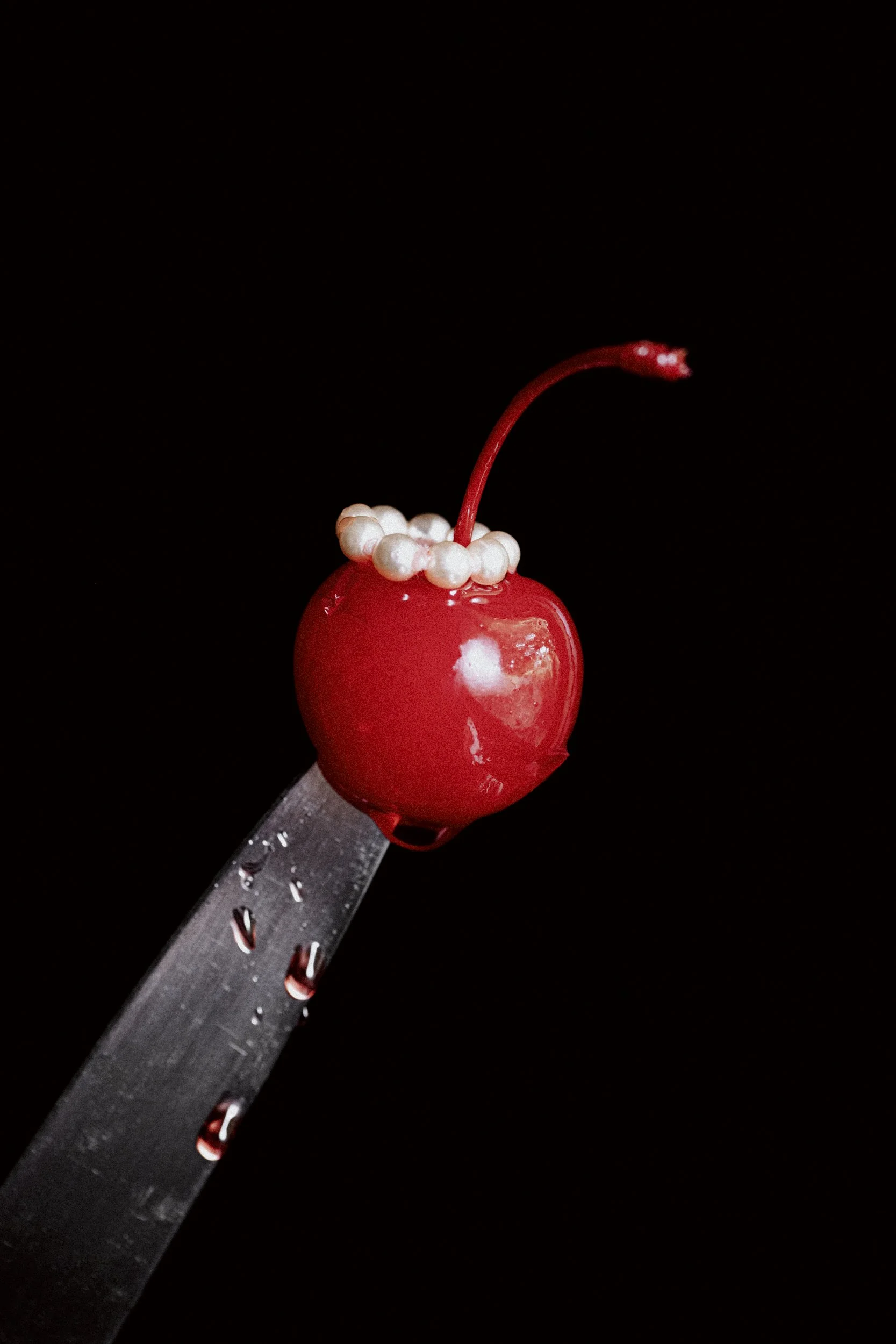
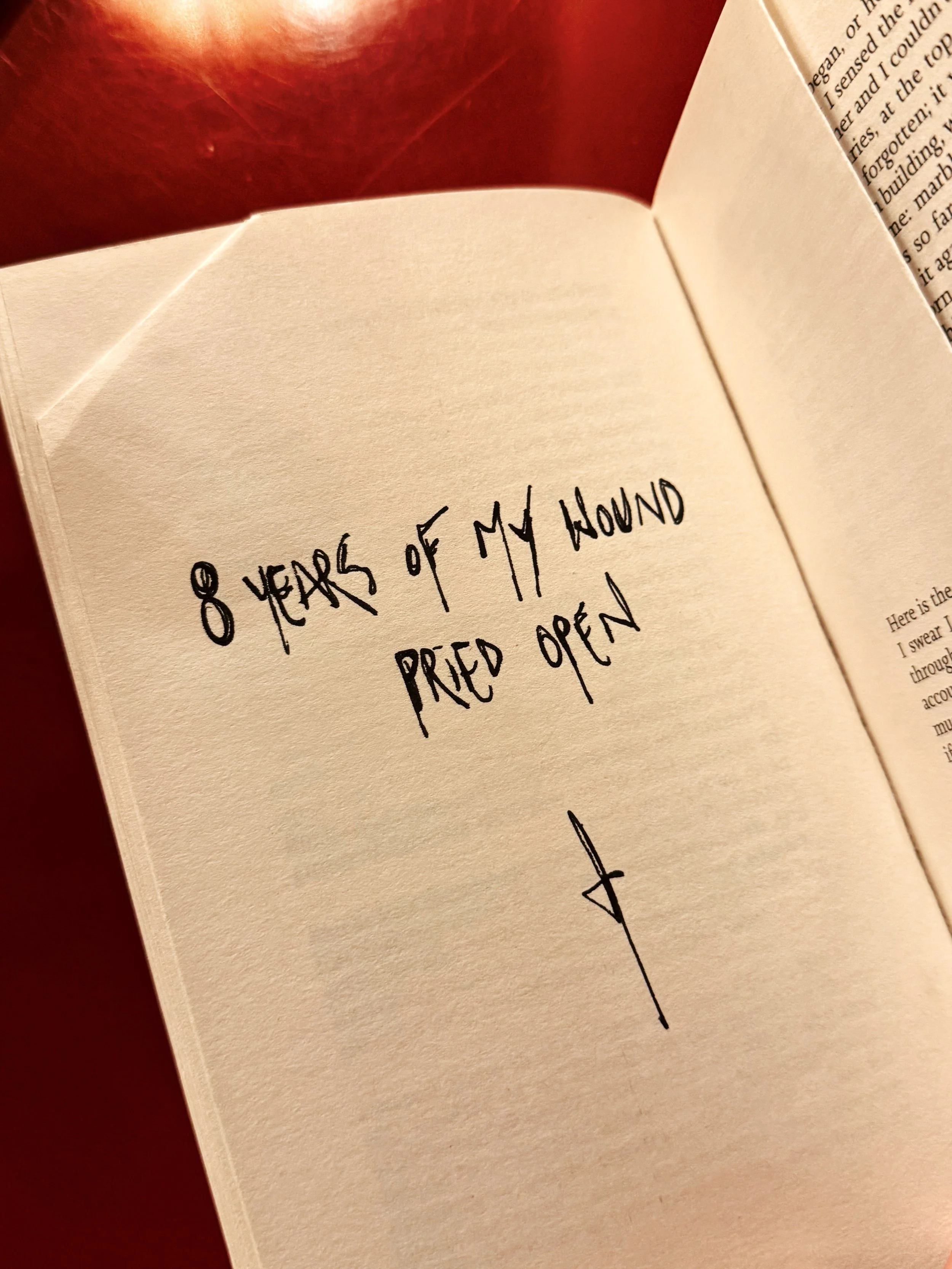
I’ve often heard that a perfect genoise separates girls from women. I’ll tell you I don’t believe this, for the hesitation and fragility I once held in my hand as a girl is very different to what I wield now as a woman. The tenderness required to achieve a feather-light sponge has been replaced with discernment, bitterness, and guile. I am better for it, as is my cooking. I use a method that warms the eggs and sugar before whipping to create structure. It’s untraditional, but as this recipe relies on air for leavening, also necessary. You’ll find the batter more resilient for it.
Be sure to act with precision in your folding, as well as assembly, too—gentle pressure with swift exaction, and a touch that’s soft but harsh, particularly when the cake reaches the upper climbs. The layers are delicate, and become even more susceptible to breaking from the weight of the buttercream, soak, and fruit. Some positioning between the fridge and the counter as you build helps to retain control.
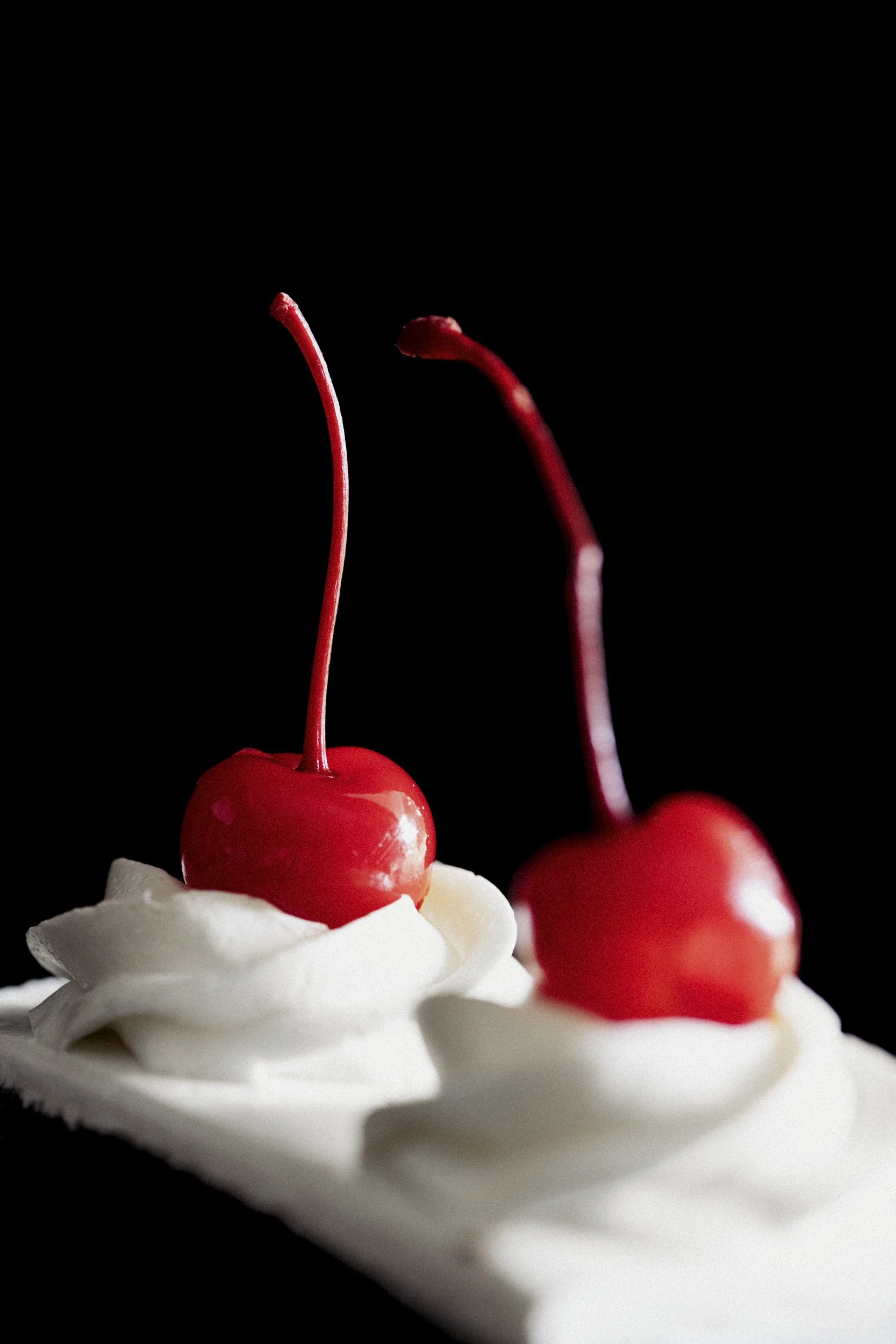
BITTER CHOCOLATE AND CHERRY CAKE
For the genoise
1 cup + 2 ½ tablespoons (145 g) all-purpose flour, 2/3 cup + 2 tablespoons (60 g) Dutch processed cocoa powder, ¼ teaspoon salt, 6 large eggs, 1 cup + 1/3 cup (270 g) granulated sugar, 1/3 cup + 1 tablespoon (100 g) unsalted butter (melted)
For the soak
½ cup (100 g) granulated sugar, ½ cup (120 ml) water, 3 tablespoons Bourbon (optional)
For the buttercream
1 cup (200 g) granulated sugar, about 5 (150 g) egg whites, 1 ¾ cups (400 g) unsalted butter (soft at room temperature), 2 teaspoons vanilla extract, ¼ teaspoon almond extract, 3 tablespoons crème fraîche
For filling and finishing
Good dark cherry jam or preserves (enough for a few thin layers), Maraschino cherries
First, make the genoise. Adjust a rack to the middle of the oven, then pre-heat it to 350°F (180°C). Line an 18 x 13 x 1-inch (46 x 33 x 2.5-cm) half sheet pan with parchment paper, leaving a collar up the sides.
In a medium bowl, sift together the flour, cocoa, and salt. Set aside.
Put the eggs and sugar into the bowl of a stand mixer, then set it over a saucepan that’s filled with a few inches of barely simmering water. Heat over medium-high, whisking constantly, until lukewarm to the touch. The sugar granules should have dissolved, and the mixture will read at around 115°F / 45°C when ready. Immediately set onto a stand mixer and fit with the whisk attachment. Whisk on medium-high speed for 7 to 10 minutes until the mixture is at ribbon-stage; thick, flowing, and tripled in volume. The bowl should be cool and all steam escaped. Through a fine-mesh sieve, sift in a third of the dry ingredients. Fold with a rubber spatula until almost combined, then sift in another third and fold, followed by the last, until no streaks remain (there’s often a tricky pocket of cocoa hiding—dig it out). Drizzle in the butter and fold until even. Slowly scrape the batter into the prepared pan, smoothing it into an even layer using an offset spatula.
Bake for 15 to 17 minutes, until the sponge is springy to the touch and has slightly shrunk from the edges. Leave to cool in the pan.
Meanwhile, make the soak. Put the sugar and water into a saucepan. Bring to a boil, then lower to a simmer, and gently cook out for a few minutes until reduced. Remove from the heat then stir through the Bourbon. Set aside to cool before use.
For the buttercream, put the sugar and egg whites into the bowl of a stand mixer. Set it over a saucepan that’s filled with a few inches of barely simmering water. Do not let the base of the bowl touch the water. Heat over medium, whisking constantly, until the sugar has dissolved and the mixture is sticky-hot to the touch. It should read at about 160°F (71°C) on a thermometer. Place the bowl onto the stand mixer. Whisk on medium-high speed until the meringue is thick and glossy, about 7 to 10 minutes. Switch out the whisk for the paddle attachment. Beat in the butter, a tablespoon at a time, until a silky-smooth buttercream has formed. Beat in the crème fraîche, followed by the vanilla and almond extract.
To assemble, carefully lift the sponge out from the pan and set it onto a cutting board. Slice into thirds, about 5-inches (13-cms) wide. Brush each piece with the soak.
Place a first sponge onto a serving plate, then spread over a few tablespoons of buttercream into an even layer. Stud with dollops of jam down the middle, leaving a few inches from the edges. Press on the next sponge, soaked side down. Again, spread with buttercream then stud with jam. Add the final sponge, applying some light pressure to adhere, then with a sharp serrated knife, trim the sides and ends to make the cake flush. Frost the top. You can either leave the layers naked and exposed, or covered in a thin layer of buttercream. If frosted, transfer to the refrigerator to set the crumb coat.
Meanwhile, put about a ¼ cup of buttercream into a piping bag that’s fitted with an open star tip. When the coating has set, cover the cake in a final, thick, layer of buttercream, neatening the sides with an offset spatula. Pipe rosettes over the top of the cake to accentuate as desired, then puncture each swirl with a single cherry.
Serve soon after, cut into thick slices. It should serve about 8 to 10.
This cake is best eaten on the day of making, but slices can be wrapped tightly and kept in an airtight container in the refrigerator for 2 to 3 days. Stand at room temperature to soften the buttercream before eating.