“Bravo! The door is shut.
Now nothing escapes, nothing enters.”
— Louise Glück, Afterword
You can return to the past but no one is there. I thought I knew what the body wanted me to do, where it needed me to go, receiving coded instruction in unknown form. It sent a worm through the ear which sculpted a slot for specific sound to be carried. A warped sound, it infiltrated, and said, that I would return to the scene of the mark. I would go back to pick myself up, I could not fail her. I found her on the floor.
But chaos, herself, is inherently beautiful.


I have heard that lesser gods live elsewhere. It is a better position to walk the earth below than to be high up with you. Beneath, I felt the sterilised memories spread under my feet and seal me in place with the hardened wax of once furious desire. And that’s how it always felt back then—forty degrees, even in the night. There was no need to move.
Thrice I brought you in, and thrice I disclaim you. Thrice we went our separate ways until the damage of the years spurted lilies at your fertile feet.
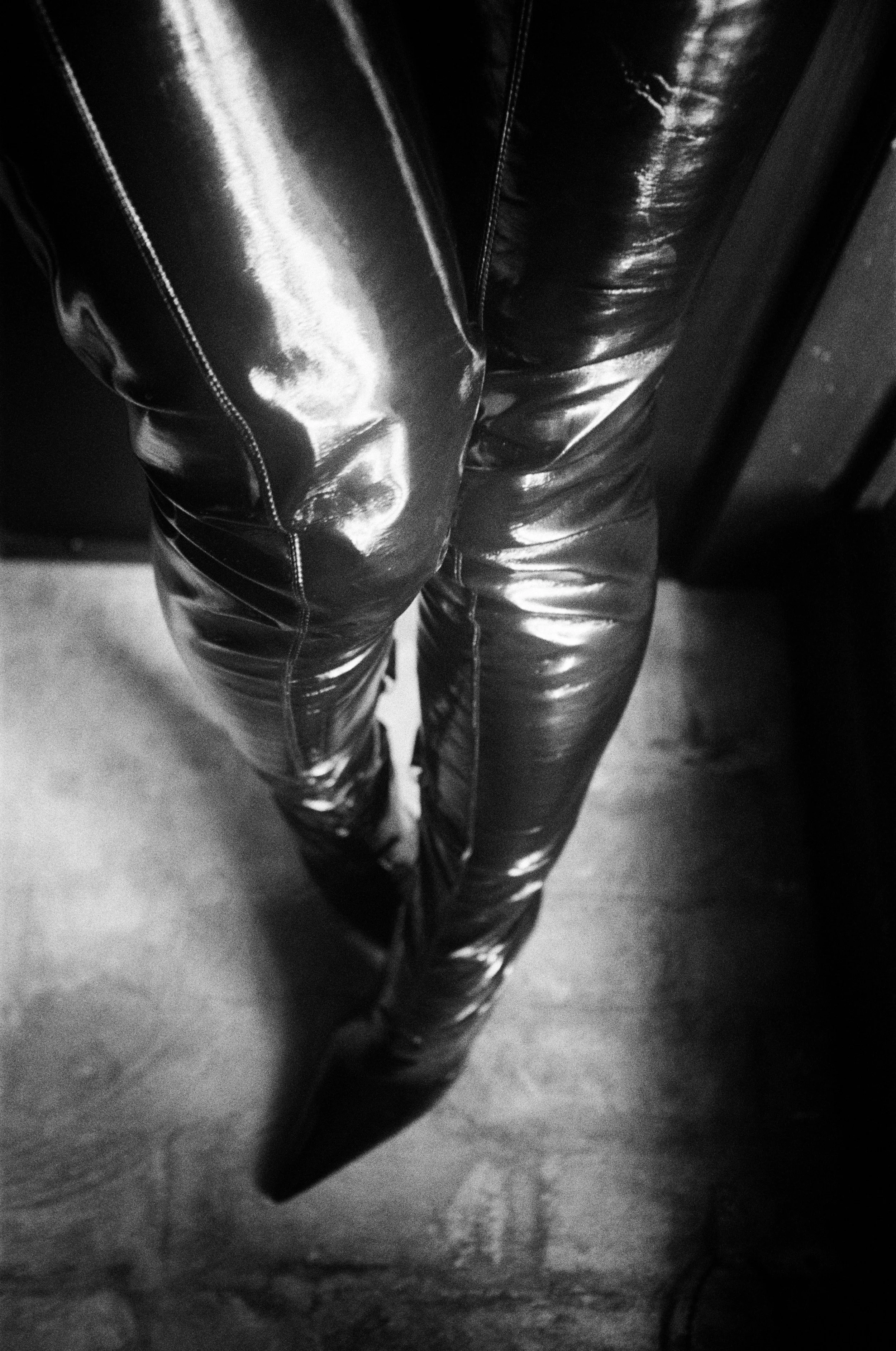


I am kept awake by the restless chatter of my old selves. I hear them writhe, and cough, and strangle, in sheets. Remember. The metallic taste of the street holds the secret promise. The only illumination at the end of an alleyway, the sole beacon above a closed door. I cast myself out, and into it. In the distance, the tall shadow of a man seemingly cut from light, as if he were composed of the filament flecks that fall from the darkness. Is it He? Show me a sign. It was written on the wall, it was etched on the body. It did not come from your mouth.
And then I see you there, in the first light, of first dawn, the final stranger.
Like a dangerous flame I left him unattended, where he was forced to grow strong and take root in my head. There are some knots that remain stuck for six years, others twenty, and cannot be undone by the severing hands of time. They rise, the cracks widen, then the foot softly slips into the crevice. It is better to stay sealed in the hotel room, far safer, in the box, the deterring mind says.
For a lack of colour can keep the horizon from expanding.
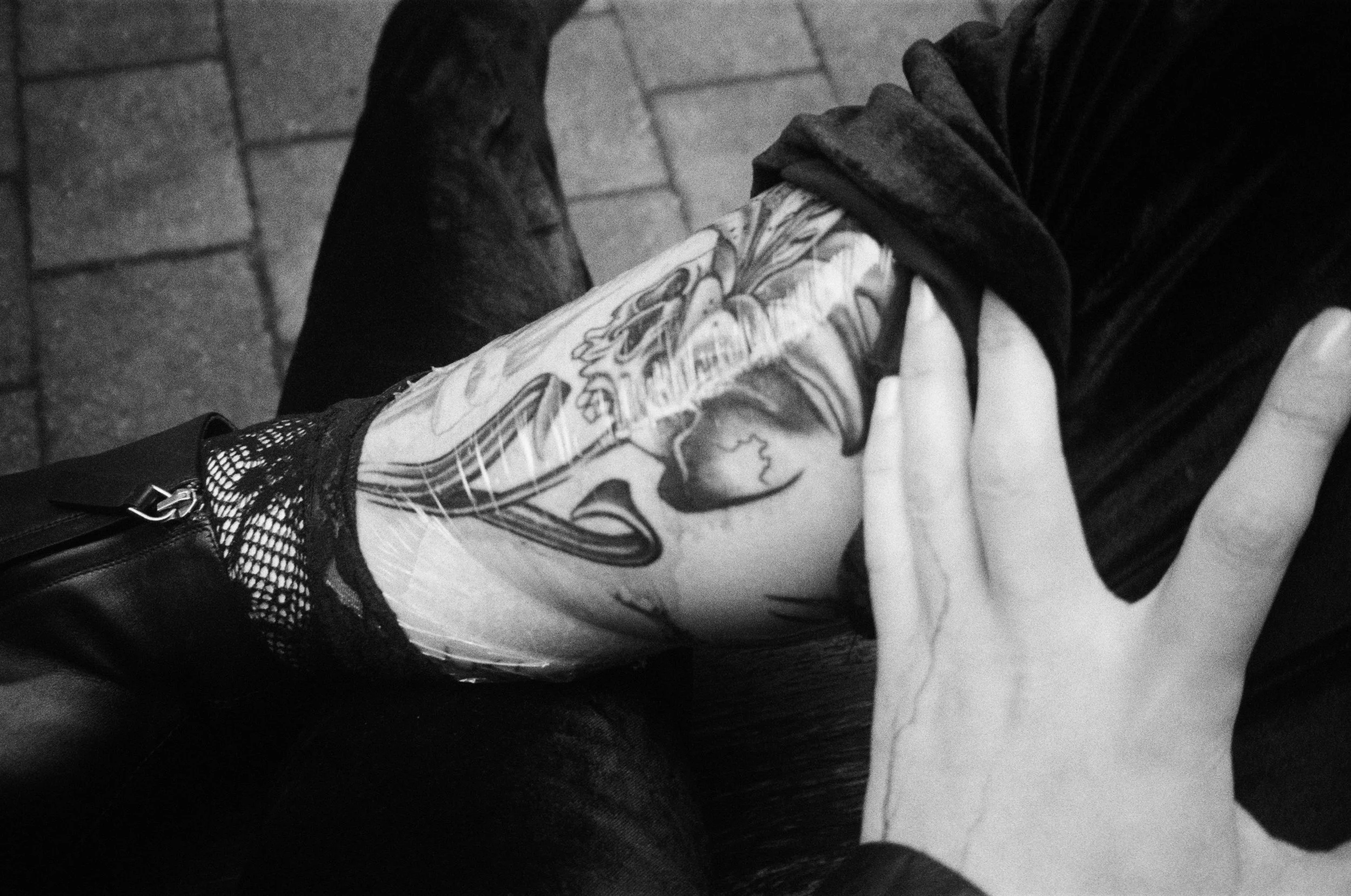
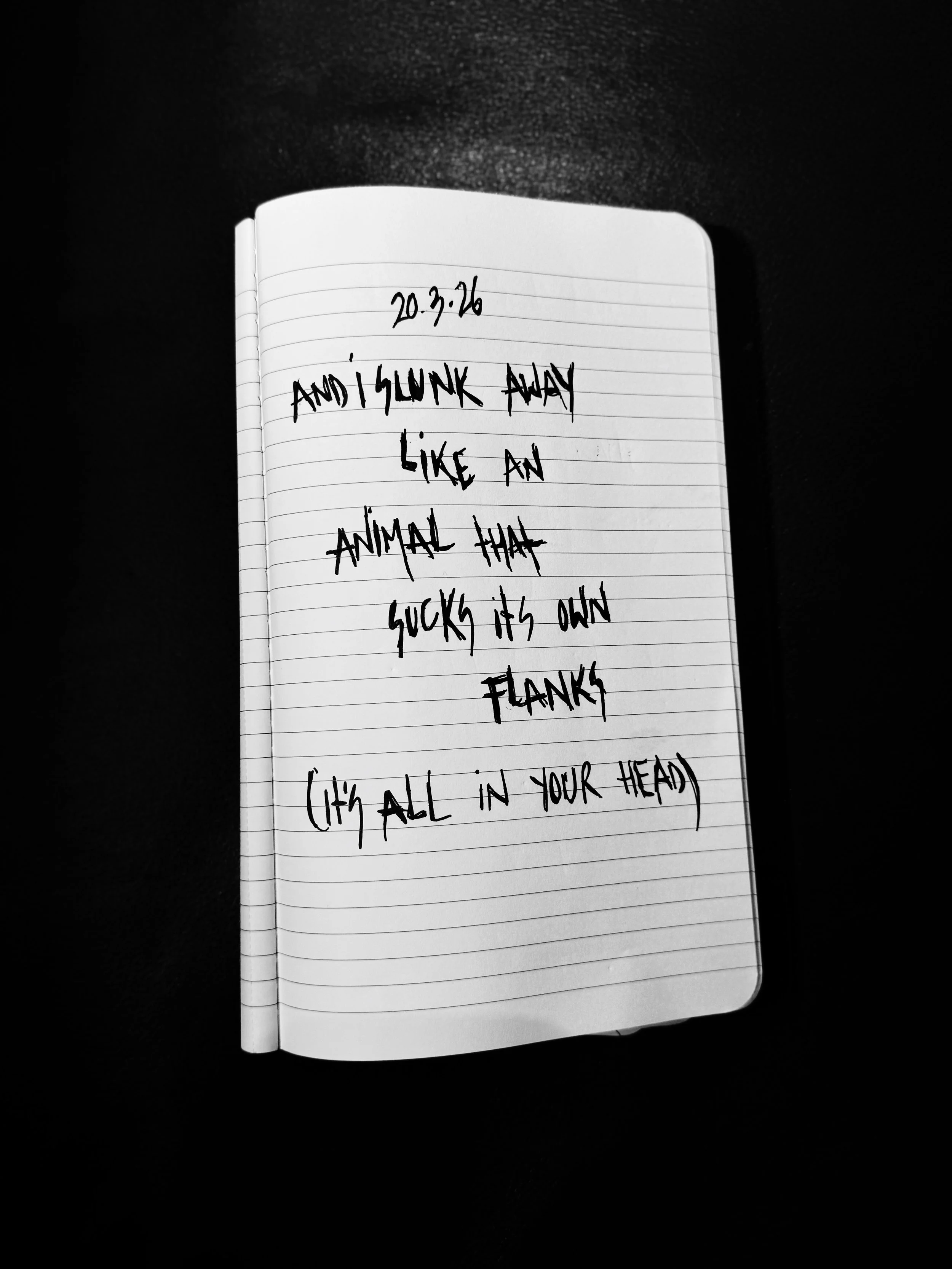
The strain of the moon becomes a self-inflicted prison. The weight of it falling upon this brow, every lash the scar of a stitch. I’ll meet you here on white paper, I say. And to admit, that I wrote this script long before it happened; that I created this work from years of almost nothing, and if I did it with pain, imagine what could be possible with love.
He covered his eyes upon exiting.
I sharpened my senses in the dark, I learned to hear through the silence, I took back my voice, and then my new life took all of it. I walked on, and felt the fear move away from me.
There is nothing else to be learned from this place.
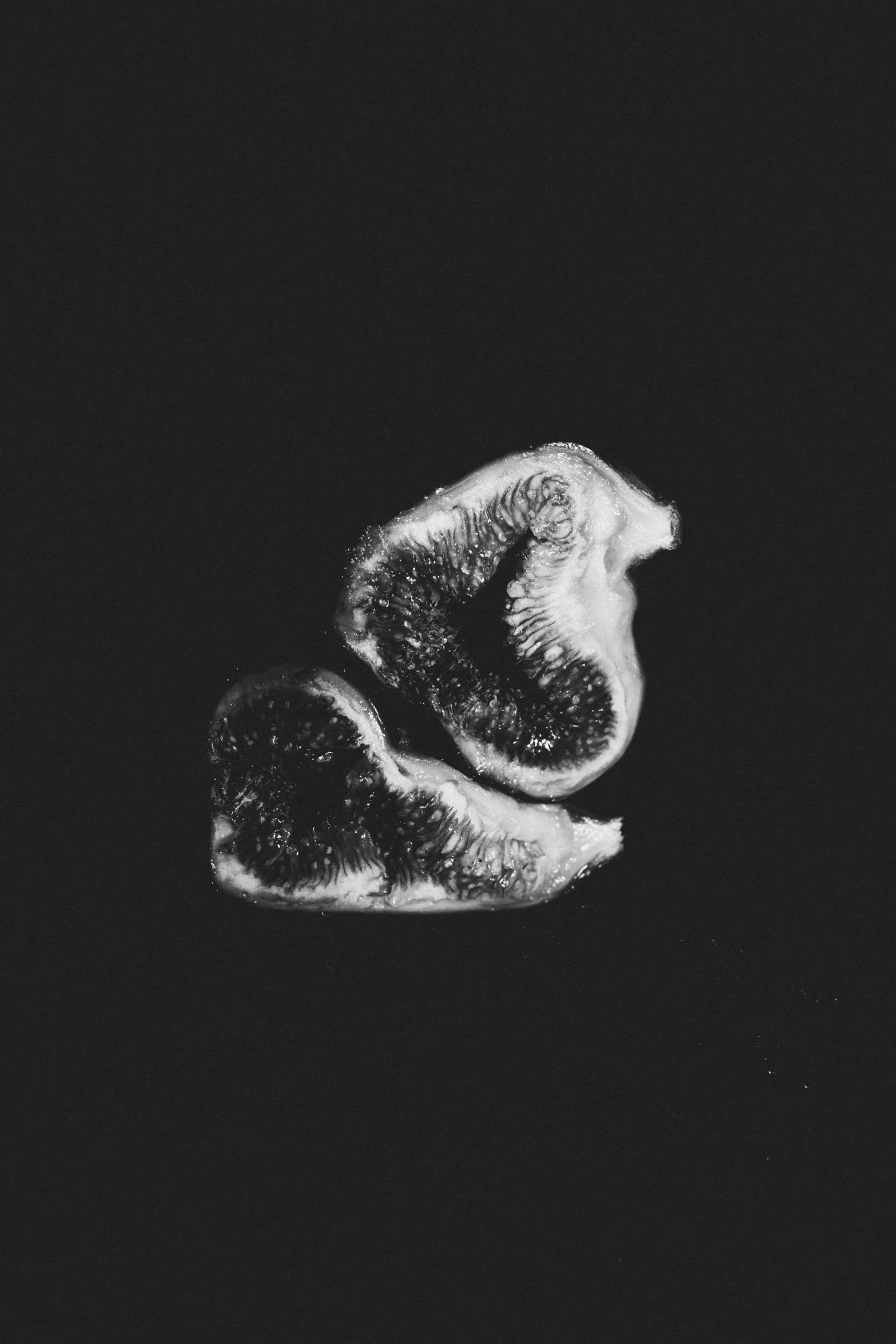
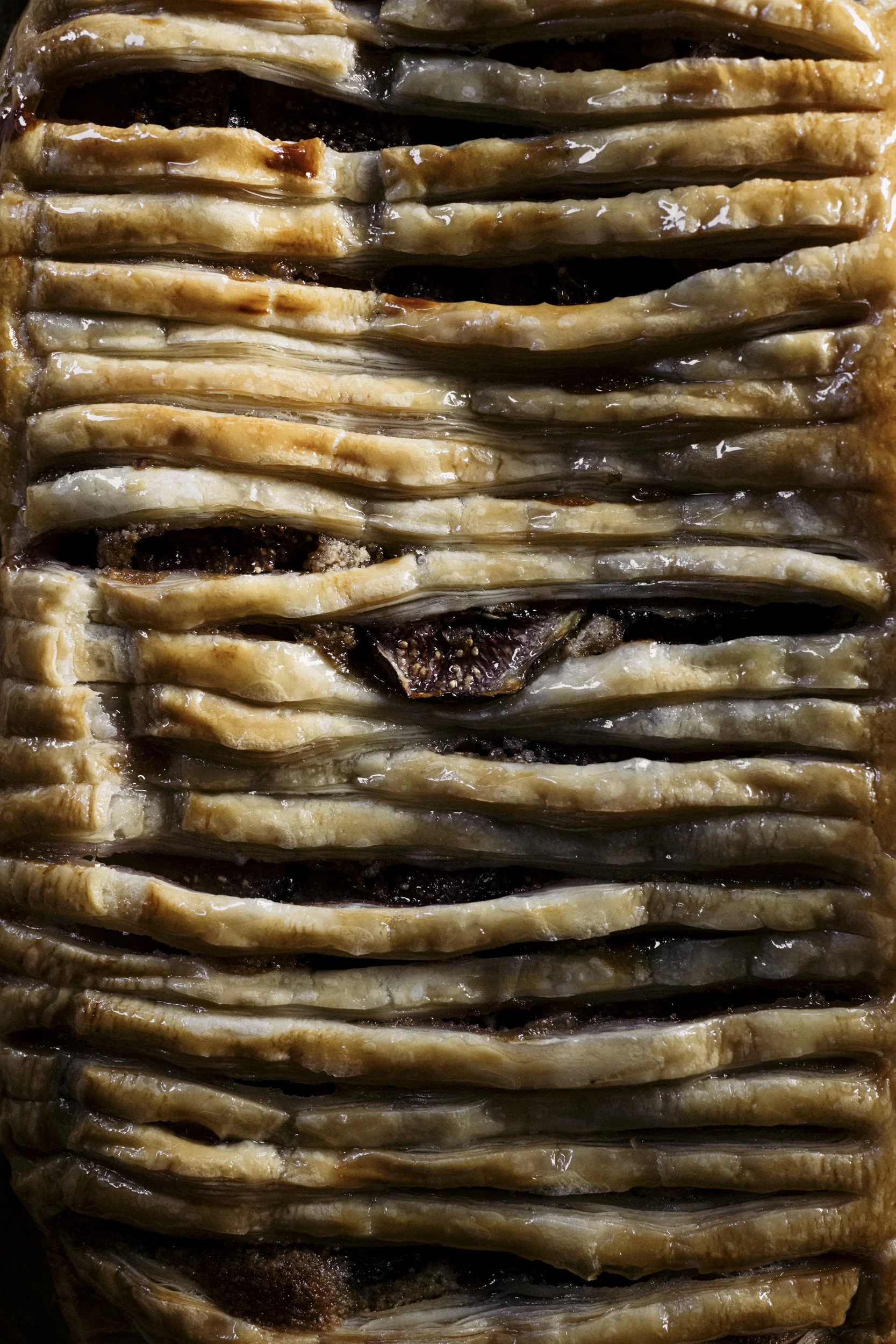
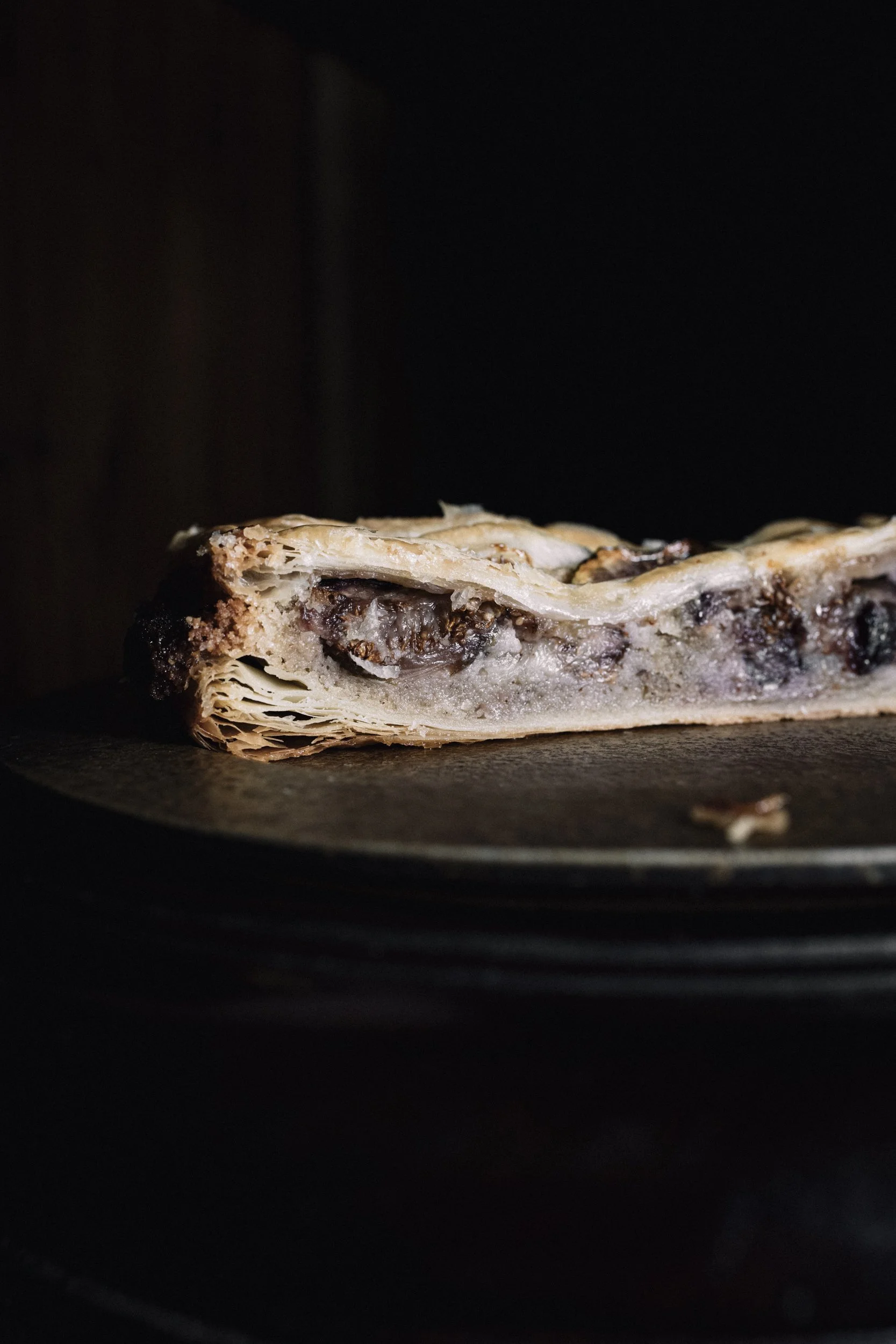
STRANGLER FIG TART
The pastry in this tart should strangle, split, and smother, the fruit. You’ll want to pry it apart with your fingers, gently, allowing the hidden interior space to breathe. If figs aren’t in season, you can use another fruit—thin slices of poached pear would be beautiful, as would various berries and stone fruits, like blackberries, apricots, or plums.
For the frangipane
1/3 cup (75 g) unsalted butter (very soft at room temperature), 1/3 cup + 1 tablespoon (75 g) granulated sugar, 3/4 cup + 1 teaspoon (75 g) ground almonds, 1/4 cup (25 g) ground hazelnuts, 1 egg + 1 large egg yolk (lightly whisked together), ½ teaspoon vanilla extract, zest from ½ a small orange, 2 tablespoons all-purpose flour, a pinch of ground clove and salt
For the tart
375 g all-butter puff pastry (the quality kind—I use carême) + (de-frosted), 4 large figs, 1 egg whisked with 1 tablespoon of milk (for the egg wash)
For the glaze
1/2 cup (100 g) granulated sugar, 1/3 cup (80 ml) water, 1 tablespoons of Cognac (optional)
First, make the frangipane. In the bowl of a stand mixer that’s fitted with the paddle attachment, beat the butter and sugar on medium speed until pale and creamy, about 3 minutes but sometimes 5 in cold weather. Lower the speed slightly, then add in the ground almonds and hazelnuts. Beat until combined, then slowly stream in the egg mixture. Beat in the vanilla and zest. Raise the speed, and beat for a few more minutes until fluffy. Add in the flour, clove, and salt. Continue to work the mixture until a light and aerated cream has formed. Set aside until needed for assembly.
Slice the figs into thin slices, as thin as you can possibly get them without tearing their delicate structure, about 1/8 of an inch thick. Roll out half of the pastry, trimming it to form a rectangle that’s about 26-cm in length, and 15-cm wide, if necessary. Transfer to a lined baking sheet. Spread over a thick layer of the frangipane, leaving an inch border from the edges—you may not need to use all of it. Lay over the sliced figs in neat, overlapping, rows.
Transfer the remaining pastry half to a lightly floured work surface. It should be in the same dimensions as the base sheet. If it’s too warm, place it back in the freezer for a few minutes to firm up. We want it just resistant enough to handle, but not too soft and malleable that the tip of the knife drags when it’s sliced. Cut thin horizontal incisions, that are about 1-cm in width, down the length of the pastry, leaving a slight border from the edge. Pry the gashes open with your fingertips. Carefully lift and fit the sheet onto the top of the tart, and adjust the strips as necessary to reveal as much or as little of the fig beneath as desired. Press the edges together to seal, making sure no frangipane escapes, then trim with a sharp knife to neaten. Transfer to the refrigerator while you pre-heat the even to 180C (350F).
When you’re ready to bake, thinly brush the top of the pastry with egg wash. Bake for 45 to 50 minutes, until golden brown all-over. While the tart is baking, make the syrup. In a small saucepan, combine the sugar and water. Bring to a steady boil over medium heat, then lower to simmer, and keep it there for a few minutes to evaporate some the water content. Remove, and stir through the Cognac, if using. Cool completely (you can chill it to help it along) before glazing the tart.
This is best eaten on the day of making, slightly warm, or at room temperature. It will keep, wrapped tightly on the counter, for about 3 days.